In November 1798, the British ship Hunter, commanded by Captain John Fearn, came upon an island that appeared on none of his charts. It was green and inviting, ringed by white surf, and as the ship drew near, canoes put out from the shore to meet it. Fearn named it Pleasant Island.
The name was apt. In hindsight, it was also a little ironic. The century that followed Fearn’s visit would bring Nauru into contact with a wider world of whaling ships, traders and beachcombers — and much of what that world brought was anything but pleasant.
A passing ship
Fearn did not go ashore, and for several decades after his visit, contact with outsiders remained rare. Nauru lay away from the main shipping routes, had no harbour where a ship could shelter, and seemed to offer little of commercial interest. The ships that did pass had to stand off the reef while islanders paddled out to meet them.
The whalers arrive
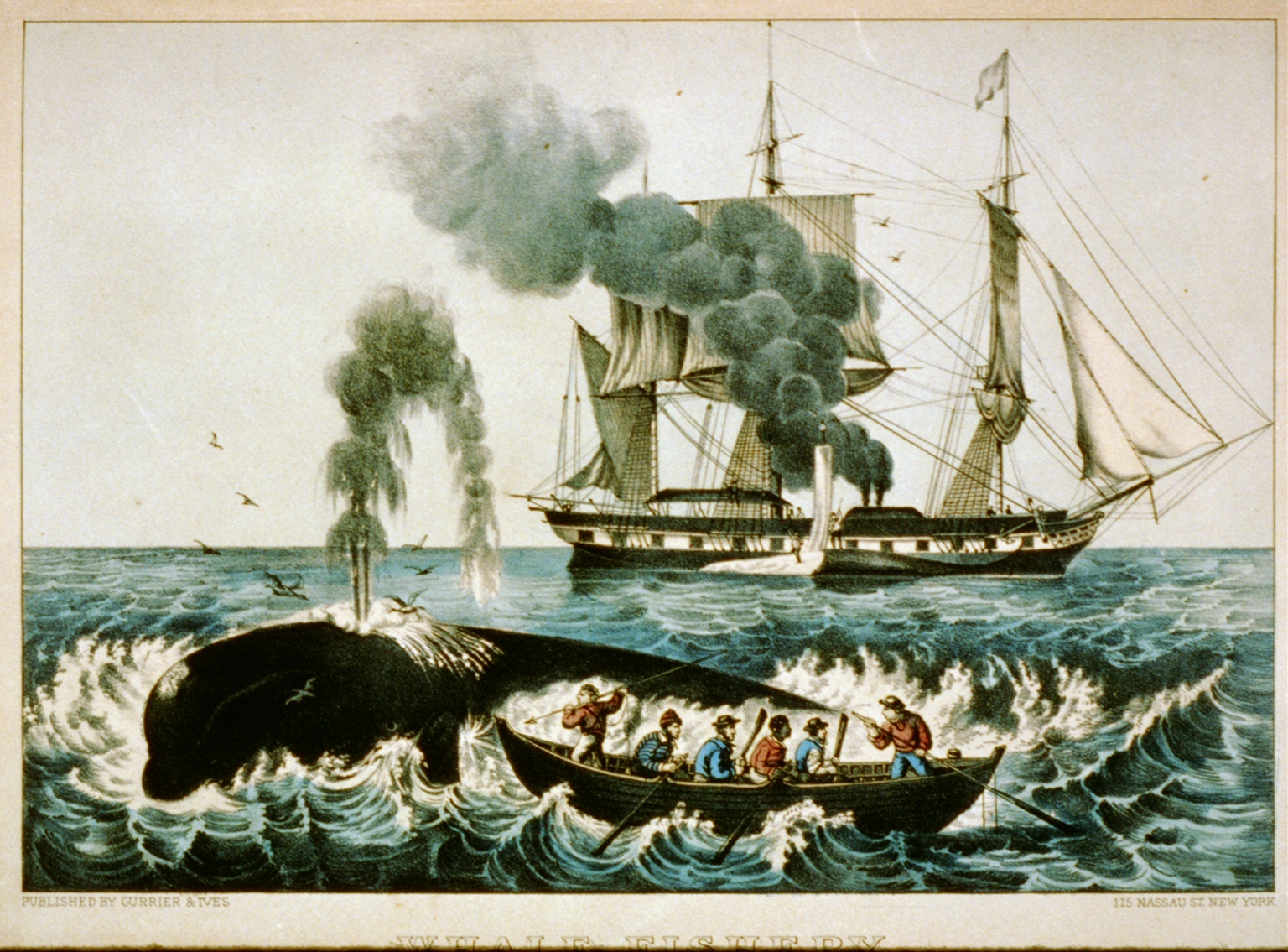
That changed with the growth of Pacific whaling in the early nineteenth century. By the 1830s, whaling ships working the central Pacific had begun to call at Nauru, and the island became a place to trade for fresh provisions after long months at sea. In exchange, the whalers offered iron, cloth, tobacco and other goods — and, increasingly, guns and ammunition.
For Nauruans, these encounters brought opportunity as well as risk. Metal tools were a genuine improvement on shell and stone, and trade goods carried prestige. But the ships also brought diseases to which islanders had little resistance, and relations between visiting crews and islanders could quickly turn violent.
The men who stayed
Some outsiders never left. Deserters from whaling ships, and convicts who had escaped from the penal colonies of Australia, came ashore and stayed. These beachcombers lived among Nauruans, learned the language and married into Nauruan families.
They were a mixed group. Some made themselves useful as interpreters and go-betweens, helping to manage trade with passing ships; some settled for good, and their descendants are part of the Nauruan community today. Others were violent, unstable men who sold guns, stirred up quarrels and made themselves feared. Together they bound Nauru more tightly into a wider Pacific world of trade — and made that world’s weapons part of island life.
Guns and toddy
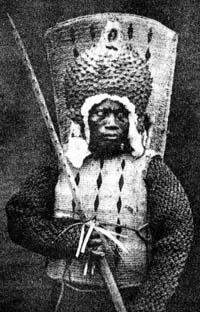
Two imports in particular changed the balance of Nauruan society. The first was firearms. Conflicts between clans had long been part of island life, but they had been fought with traditional weapons that limited the scale of killing. Guns made fighting far more deadly, and once one group had them, others felt they had to obtain them too.
The second was alcohol. Nauruans learned to ferment the sap of the coconut palm into a strong toddy — a practice said to have been introduced by outsiders — and heavy drinking became associated with violence and disorder. By the second half of the nineteenth century, the combination of guns, alcohol and old rivalries had made the island a dangerous place.
The Ten Years’ War
The spark came in 1878. According to Nauruan tradition, a quarrel broke out at a celebration — usually described as a marriage feast — during which a young chief was shot. What might once have been settled through negotiation and compensation instead escalated into open warfare between rival clans.
The fighting that followed lasted a decade. It was not a single campaign but a long series of raids, ambushes and reprisals, in which firearms were used on a scale the island had never seen. Families were divided, fishing and food gathering were disrupted, and fear became part of daily life.
The human cost was catastrophic. Warfare, together with disease, is thought to have reduced the population from around 1,400 to about 900 by the time the fighting ended. For a people so small in number, the loss of roughly a third of the population threatened the survival of the community itself.
Ended by a gunboat
The war was ended not by Nauruans but by outsiders. In the 1880s, the European powers were dividing the Pacific among themselves, and under an agreement with Britain in 1886, Germany gained a sphere of influence that included Nauru. German commercial interests, already well established in the Marshall Islands, wanted order restored.
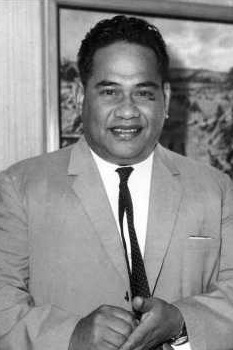
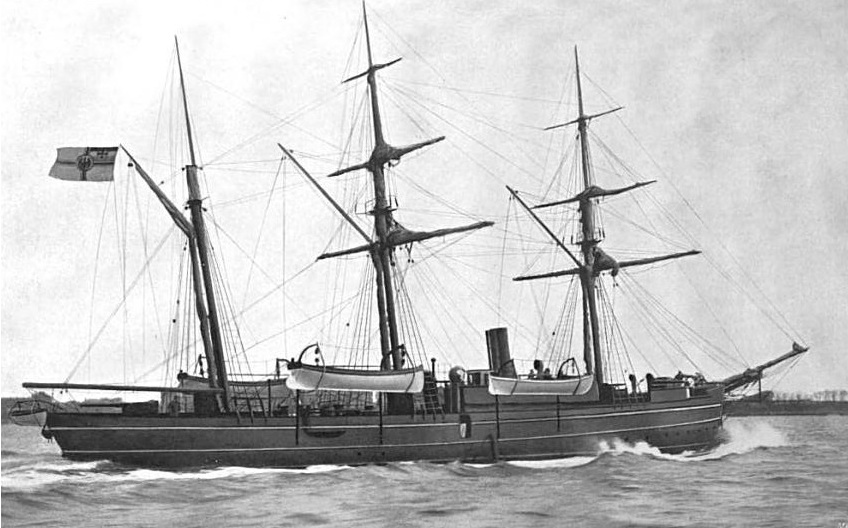
In October 1888, the German gunboat SMS Eber arrived off Nauru with a detachment of troops. The island’s chiefs were detained until the islanders handed over their weapons — hundreds of guns were surrendered — and alcohol was banned. Nauru was formally annexed to Germany’s Marshall Islands Protectorate, and the Germans recognised a paramount chief, Auweyida, as “king”.
What the war left behind
The Ten Years’ War is remembered as one of the darkest periods in Nauru’s history. It showed how quickly contact with the outside world could destabilise a small society — not at first through conquest, but through the trade in weapons and alcohol, through disease, and through the actions of men who answered to no one.
It also left Nauru weakened at the very moment colonial powers were taking an interest in the island. Little more than a decade after the German annexation, the discovery of phosphate would make Nauru far more valuable to outsiders than Fearn could ever have imagined. The pleasant island was about to become an industrial one.
Further reading
- Nancy Viviani, Nauru: Phosphate and Political Progress (Canberra: ANU Press, 1970).
- Albert F. Ellis, Ocean Island and Nauru: Their Story (Sydney: Angus & Robertson, 1935).
- Paul Hambruch, Nauru, 2 vols. (Hamburg, 1914–15).