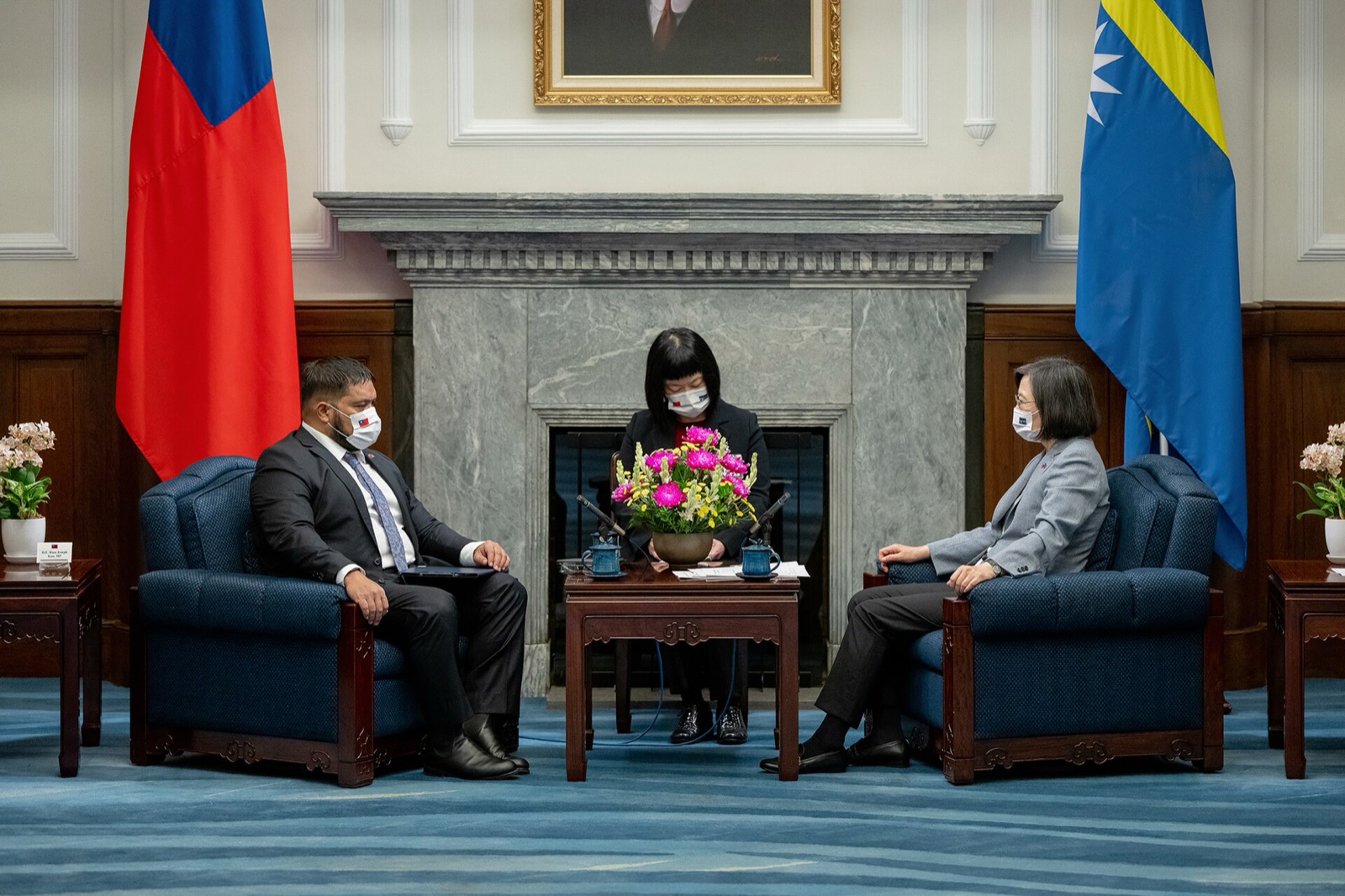
On 13 January 2024, Taiwan elected a new president. Two days later, Nauru announced that it no longer recognised Taiwan as a country, and that it would restore diplomatic relations with the People’s Republic of China. It was not the first time. It was the third time in just over twenty years that the island had switched sides.
A small state with a vote
Nauru became independent in 1968, but for many years it stayed out of the big international organisations. It was a special member of the Commonwealth rather than a full one, and it did not join the United Nations until 14 September 1999. Even then, its application was questioned by the People’s Republic of China, which objected to Nauru’s close ties with Taiwan. China abstained rather than use its veto, and Nauru took its seat.
That seat mattered. Under the “One China” principle, no country can have official relations with both Beijing and Taipei at once. Both governments compete for recognition, especially among small Pacific nations, and each recognising country adds a voice for its side in international forums.
Taipei, 1980
Nauru first established diplomatic relations with the Republic of China, as Taiwan is formally known, in 1980, during the boom years of the phosphate economy. For two decades the relationship held steady, and Taiwan became a significant aid partner.
The first switch
By 2002 the phosphate money was running out, and Nauru’s government was in financial crisis. On 21 July that year, President René Harris signed a joint communiqué in Hong Kong recognising the People’s Republic of China as “the sole legal government representing the whole of China”. Beijing had reportedly promised more than US$130 million in aid. The communiqué even committed Nauru to close its embassy in Taipei — an embassy it had never actually had.
Taiwan gave Nauru an ultimatum to withdraw within 24 hours. In the confusion, Nauru did not reply, and on 23 July 2002 Taiwan broke off relations.
And back again
The new relationship soon cooled. In 2003 Nauru closed its embassy in Beijing. Two years later, President Ludwig Scotty met Taiwan’s President Chen Shui-bian in the Marshall Islands, and on 14 May 2005 Nauru and Taiwan restored diplomatic relations, this time opening embassies in each other’s capitals. China cut its ties with Nauru at the end of the month.
For the next nineteen years, Taiwan was one of Nauru’s two most important aid partners, alongside Australia. It sent medical teams to the island’s only hospital, Nauru used its seat at the United Nations to support Taiwan’s bid for membership, and in 2007 Nauru sent its first ambassador to Taipei. The rivalry never fully went away: diplomatic cables leaked in 2011 alleged that Taiwan had been making regular payments to Nauruan ministers and MPs, a claim that fuelled accusations of “chequebook diplomacy” on both sides.
2024
The third switch came under President David Adeang. On 15 January 2024, Nauru declared that it recognised the People’s Republic of China as the only legitimate government of China, and Taiwan as part of it. Taiwan immediately ended relations, blaming pressure from Beijing. On 24 January, Nauru and China formally re-established diplomatic ties.
Beyond China
Nauru’s diplomacy is not only about Taiwan and China. It has long been willing to take a stand: in 1995 it broke off relations with France in protest at French nuclear testing in the Pacific, restoring them two years later. It hosted the meeting that produced the Nauru Agreement, under which a group of Pacific nations jointly manage tuna fisheries that supply a large share of the world’s tuna. And at various times since 2001 it has hosted Australia’s offshore immigration processing centre, an arrangement that has brought the island both income and intense international scrutiny.
In 2024, former president Baron Waqa became Secretary-General of the Pacific Islands Forum, the region’s leading political body. For a country smaller than many airports, Nauru has found a surprisingly loud voice.
Further reading
- Terence Wesley-Smith and Edgar A. Porter (eds), China in Oceania: Reshaping the Pacific? (New York: Berghahn Books, 2010).
- Joint Communiqué on the Establishment of Diplomatic Relations between the People’s Republic of China and the Republic of Nauru, 21 July 2002.
- United Nations Security Council, Resolution 1249 (1999), on the admission of Nauru to the United Nations.